What is Plastic Supplement Bottle?
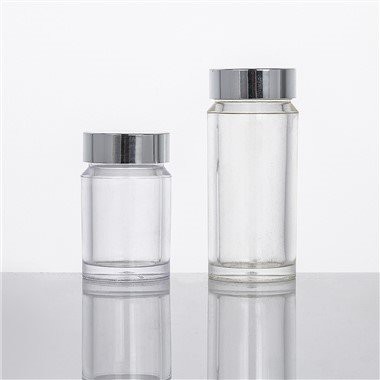
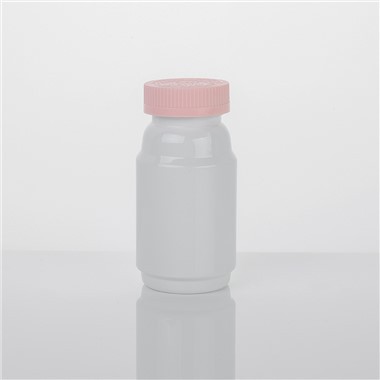
A plastic supplement bottle is a specialized container designed specifically for the storage and dispensing of dietary supplements, such as vitamins, minerals, herbal extracts, and other nutraceutical products. Crafted from high-quality, food-grade plastics like polypropylene (pp) or polyethylene terephthalate (pet), these bottles offer a lightweight, shatterproof, and moisture-resistant alternative to traditional glass containers.
Advantages of Plastic Supplement Bottle
Product Protection
Plastic supplement bottle offer exceptional barrier properties, protecting pharmaceutical products from moisture, light, and oxygen, which can compromise their stability and efficacy. This safeguards the potency and quality of medications, ensuring their effectiveness for patients.
Transparency And Visibility
Plastic supplement bottle are known for their clarity, allowing healthcare professionals and patients to visually inspect the contents, verify the accuracy of labels, and detect any signs of tampering or contamination. This transparency enhances safety and builds trust in the pharmaceutical supply chain.
Lightweight And Durability
Plastic supplement bottle are lightweight, reducing transportation costs and environmental impact. Their durability ensures that medications are well-protected during handling, shipping, and storage, minimizing the risk of damage.
Versatility
Plastic supplement bottle can be molded into various shapes and sizes, accommodating different types of pharmaceutical products, including liquids, powders, and solid doses. This versatility allows for customized packaging solutions that meet specific needs and improve user convenience.





Why Choose Us
Our Product
We are a company specializing in the production of all kinds of plastic products, with a wide range of products, involved in health care category, cosmetics, medical supplies, daily necessities, chemical industry, metal and other major categories.
Our Factory
Our company has always been "quality first, customer first, openness basing on sincerity, considerate service" for the purpose of establishing long-term strategic partnership with customers. We can send free samples to customers for testing, but also can produce products according to customers' design drawings or samples, and strictly control the quality of products in every production link.
Our Service
We direct to the consumer, no intermediary sellers, to provide customers with simple, direct and effective supply. We can give every customer the perfect quality, good price and simple and fast transportation, we always take the customer as their own responsibility, to provide customers with better, more assured products.
Our Certifications
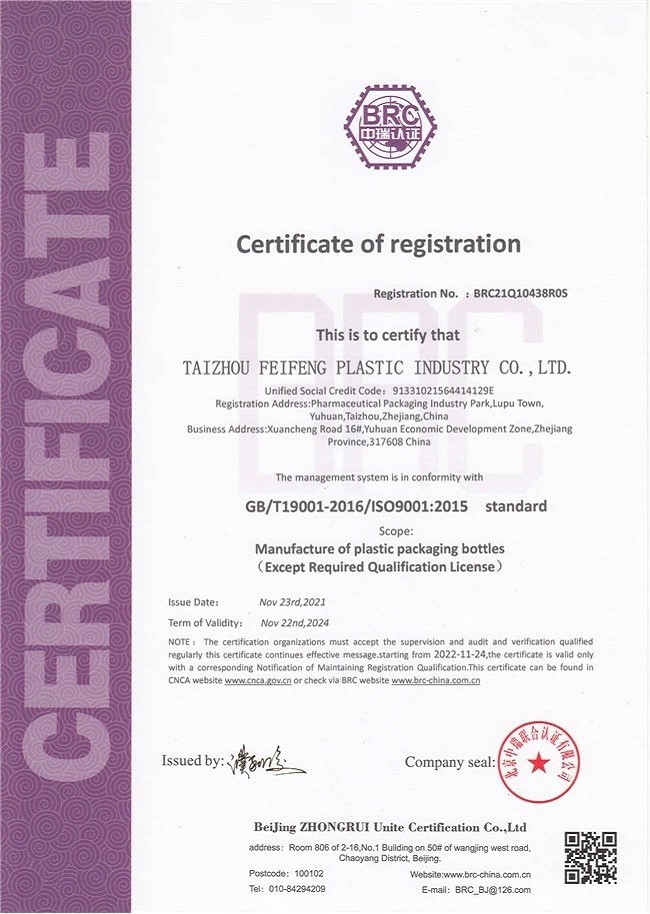
Our company has iso9001, food plastic packaging production license, other certificates are in the process of application, to give you a safe and assured product, welcome to consult and understand.
Factors to Consider When Choosing a Plastic Supplement Bottle
Plastic supplement bottle come in various materials, each with unique properties. The most common materials used for nutritional liquid supplements include:
Pet (polyethylene terephthalate): Pet bottles are crystal clear, lightweight, and known for their excellent oxygen barrier properties. They’re ideal for products requiring transparency, like fruit juices or clear supplements.
Hdpe (high-density polyethylene): Hdpe bottles are sturdy and resistant to chemicals, making them suitable for aggressive formulations or products with a long shelf life.
Ldpe (low-density polyethylene): Ldpe bottles are flexible and squeezable, making them perfect for liquid supplements designed for on-the-go consumption.
Pp (polypropylene): Pp bottles offer a good moisture barrier and are often used for products that need to be protected from moisture and air, such as syrups or oil-based supplements.
Each material has its advantages, so your choice should align with your supplement’s specific needs.
The bottle’s shape and size should reflect your product’s branding and practicality. Consider whether your supplement is better suited to tall and slim bottles, squat and wide bottles, or something in between. Additionally, evaluate the bottle’s capacity; it should comfortably hold your product’s volume without excess space.
The type of closure or cap you choose can influence the ease of use, product dispensing, and the bottle’s resealability. Common closure types include screw caps, flip-tops, pump dispensers, and dropper caps. Ensure that the closure complements your bottle and product design while being practical for consumers.
Your bottle should provide ample labeling space for essential product information, branding, and regulatory compliance. Consider factors like label size, shape, and placement to create an appealing and informative packaging design.
Assess the barrier properties of the bottle material to ensure it protects your supplement from external factors. For instance, if your product is sensitive to light, opt for an opaque or uv-resistant bottle.
Consider environmental concerns and the recyclability of your chosen plastic. Many consumers prefer products with eco-friendly packaging, so using recyclable materials can boost your brand’s image.
Balance your budget with your packaging needs. While high-quality materials and unique designs can be enticing, they should align with your product’s pricing and market positioning.
Materials Used in Plastic Supplement Bottle
01
Polyethylene
Non-toxic, odorless, waxy to the touch, excellent low-temperature performance (the lowest operating temperature can reach -70-100 ° c), corrosion resistance to most acids and alkalis (not resistant to acids with oxidative properties), flexibility well, it is not easy to break when dropped. Small water absorption, excellent electrical insulation. This kind of raw material is a type that is widely used in medical plastic bottles.
02
Polypropylene
Polypropylene feels harder than pe, but it has poor flexibility and high temperature resistance. The operating temperature range is -30~140°c. Solvent corrosion, can decompose under high temperature and oxidation.
03
Polyester
High transparency, impact resistance, oil resistance, dilute acid resistance, and most solvent resistance, but it is afraid of high temperature. If it is packed in a packaging bag and exposed to the sun, it will be deformed, so pay attention to the transportation of polyester bottles, and be careful not to use cartons. Show. Some candy tablets, calcium tablets, and oral liquids will choose transparent polyester bottles.

Plastic supplement bottle are widely used in the packaging of tablets, capsules and pills. It has created conditions for china's preparation products to enter the international market and improve the level of domestic pharmaceutical packaging. The medicinal plastic bottle is non-toxic, clean, strong, anti-infiltration, light, light-proof and good in sealing. It reduces the cost of washing, drying, disinfecting and sealing wax for the pharmaceutical factory, reducing the cost. Increased market share.
The quality of pharmaceutical packaging products depends on the molding method. Injection molding is currently the most widely used production process in the pharmaceutical industry. It includes: Plasticizing, injection molding, blow molding, demoulding and other aspects.
●The resin is plasticized by the heater, pressurized, the solid conveying section temperature setting range is 220~235 degrees, the compression section temperature is set at 230~240 degrees, and the homogenization section temperature is set at 235~250 degrees.
●The molten material is injected into the injection mold through the injection nozzle to form a parison injection pressure of 290 to 320 psi.
●Compressed air is blown into the central hole of the core rod to inflate the parison, and the compressed air must be clean, free of oil, water, and pressure at 8-10kg/cm3;
●Automatically demoulding the shaped bottle at the demolding station.
What Should I Pay Attention To When Using Plastic Supplement Bottle For Health Products
Firstly, let's understand the definition, characteristics, and value of plastic supplement bottle for health products. Health product plastic bottles are polymer material containers specifically used for packaging health products, usually made of raw materials such as polyethylene, polypropylene, and polyvinyl chloride. They have the advantages of light weight, non fragility, and portability, making them the mainstream form of health product packaging market. At the same time, plastic bottles for health products also have good barrier performance, which can effectively protect health products from the influence of the external environment.
However, there are several things to pay attention to when using plastic bottles for health products. Firstly, it is important to avoid placing plastic bottles of health products in environments with high temperatures and direct sunlight. Because high temperatures and direct sunlight can cause plastic bottles to deform or lose their sealing, thereby affecting the preservation effect of health products. Secondly, it is important to avoid scratching or puncturing plastic bottles of health products. Because once the surface of a plastic bottle is damaged, its protective performance will decrease, which may have adverse effects on health products.
So, why should we pay attention to these matters? The reason is that the physical and chemical properties of plastic bottles for health products are influenced by environmental factors. Under high temperatures and direct sunlight, plastic bottles may deform or degrade, leading to a decrease in their sealing performance. This not only affects the preservation effect of health products, but may also have an impact on their efficacy. In addition, if the surface of plastic bottles for health products is scratched or punctured, its protective performance will decrease, which may cause pollution to the external environment and even affect the efficacy of health products.
Next, let's learn about the industry background of plastic bottles for health products. There are two main production processes for plastic bottles of health products: Injection molding and blow molding. Among them, injection molding involves first injecting plastic particles into the mold, then melting and filling the mold through heating and pressure, and then opening the mold to remove the finished product after cooling. Blow molding involves adding plastic particles to a blow molding mold, then blowing the plastic particles into a bottle shape using compressed air, and then removing the finished product after cooling. In these two production processes, blow molding can produce thinner bottle walls and reduce the weight of the bottles, making it more popular in the market.
So, why choose certain plastic bottles as packaging materials for health products? Firstly, plastic bottles have the advantages of being lightweight, non fragile, and easy to carry, making them an ideal choice for packaging health products. Secondly, plastic bottles have good barrier properties and can effectively protect health products from the influence of the external environment. In addition, the simple production process and low cost of plastic bottles also make them dominant in the health product packaging market.
In addition to the items mentioned above, there are other things to pay attention to. For example, it is important to avoid placing plastic bottles of health products in damp environments, as such environments may cause health products to become damp or even deteriorate. In addition, different types of health products may require different plastic bottle materials for packaging, so when choosing health product packaging, it is necessary to fully consider its applicability and safety.
What Kind Of Health Plastic Supplement Bottle Can Be Safely Reused
Material characteristics and analysis of plastic bottles for health products
The materials used in plastic bottles for health products can usually be divided into several main plastic materials, such as pet, hdpe, pp, etc. Among them, pet material has excellent transparency and transparency, high waterproof and moisture resistance, light density, and is super suitable for recycling and reuse. Pe material has strong corrosion resistance and lightweight characteristics, while pp material has excellent transparency and uv resistance, which is very commonly used in the production of plastic bottles for health products. From the perspective of material characteristics, pet, hdpe, and pp plastic bottles are easy to reuse, especially pet plastic bottles can be recycled up to 25-30 times, becoming a key type of plastic in current design and recycling.
Hygienic standards and reuse methods for reusable plastic bottles of health products
When discussing the reuse of plastic bottles for health products, hygiene standards are very important. Reusing plastic bottles can face problems such as bacterial accumulation, chemical residue, and surface damage. Therefore, it is necessary to establish hygiene standards and testing procedures to ensure that the reused health product plastic bottles comply with national hygiene standards and industry regulations. The main ways of reuse include cleaning and disinfection, drying and testing, packaging and storage, etc., which need to be strictly operated according to relevant standards and procedures. Only plastic bottles that pass the testing can enter the reuse market.
Safety assessment and monitoring of the reuse of plastic bottles for health products
The most basic thing is to conduct physical performance and chemical substance testing. In the testing, the safety of reusing plastic bottles for health products should not be underestimated, and the reuse effect of plastic bottles should not be overestimated. It is recommended to monitor the chemical composition of the loaded substance, environmental temperature and humidity, and storage time of the loaded substance, and then determine the details of the bottle body for reuse based on the monitoring data.
Environmental sustainability concerns regarding the reuse of plastic bottles for health products
Reusing plastic bottles for health products is an environmentally friendly measure that meets the requirements of resource conservation and environmental protection. The reuse of plastic bottles can not only reduce plastic pollution and material waste, but also save energy and reduce carbon emissions. The production and use of plastic bottles consume increasing energy, so reuse can greatly reduce energy consumption, improve material reuse efficiency, and contribute to environmental protection.
What Are The Differences Between Medicinal Plastic Bottles And Health Care Plastic Supplement Bottle In Packaging Products
Firstly, there are differences in material between medicinal plastic bottles and health product plastic bottles. Pharmaceutical plastic bottles generally use medical grade materials such as polyethylene (pe) and polypropylene (pp). These plastic materials have good chemical resistance, high temperature resistance, acid and alkaline resistance, and can be compatible with drug components to ensure the stability and safety of drugs in the bottle. Plastic bottles for health products generally use food grade materials such as polyethylene (pe) and polypropylene (pp), which also have certain chemical corrosion resistance and temperature resistance, ensuring the quality and safety of health products.
Secondly, there are also differences in the design of medicinal plastic bottles and health product plastic bottles. The design of medicinal plastic bottles places greater emphasis on sealing and safety. Medical plastic bottles generally adopt multiple sealing measures such as caps and stoppers to prevent the influence of external factors such as oxygen and moisture on drugs, playing an important role in the preservation and protection of drugs. At the same time, the design of medicinal plastic bottles also takes into account ease of use, making it easy for patients to use the medication according to medical instructions. The design of plastic bottles for health products places more emphasis on appearance and portability, in order to attract consumers' attention and provide a convenient user experience.
In addition, there are also some differences in the production process between medicinal plastic bottles and health product plastic bottles. Due to the higher requirements for quality and safety of pharmaceutical products, the production process of pharmaceutical plastic bottles usually requires stricter control and testing. Sterile production environments are often used in the production process of pharmaceutical plastic bottles to avoid the impact of external pollutants on drugs. At the same time, various physical and chemical performance tests are often conducted in the production of medicinal plastic bottles to ensure that they comply with relevant regulations and standards. In contrast, the production process of plastic bottles for health products is generally relatively simple, with a focus on ensuring appearance quality and dimensional consistency.
Finally, there are also some differences in market applications between medicinal plastic bottles and health product plastic bottles. Due to the unique nature of drugs, plastic bottles for medicinal purposes are generally used for packaging and storage of drugs, such as tablets, granules, liquid formulations, etc. These drugs are generally used clinically and have higher requirements for the quality and stability of the bottles. And plastic bottles for health products are mainly used for packaging of health products, food supplements, and other products. These products are relatively loose and have relatively low requirements for bottles.
There are some differences in material, design, production, and application between plastic bottles for medicinal and health products. These differences mainly stem from the different requirements of the two types of bottles before, after use, and during use. Medical plastic bottles pay attention to safety and stability, and need to meet the storage and protection requirements of drugs; and plastic bottles for health products pay more attention to appearance and portability to provide consumers with a better user experience. Understanding these differences helps to better select and use suitable plastic bottles to package the corresponding products.
Certifications