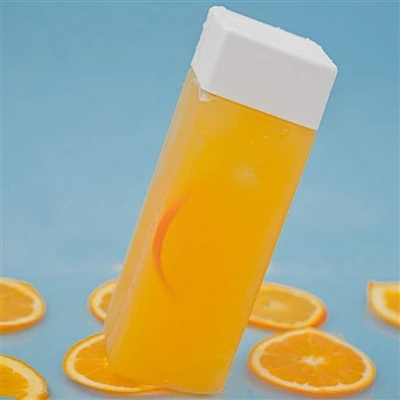
What is Disposable Beverage Bottle?
A disposable beverage bottle is a single-use container designed for the temporary storage and consumption of liquid refreshments, such as water, soft drinks, juices, or iced teas. Typically made from lightweight materials like pet plastic, aluminum, or paperboard, these bottles offer convenience and portability for on-the-go hydration or refreshment. Disposable beverage bottles are commonly produced with ergonomic shapes and easy-to-grip surfaces, ensuring a comfortable user experience.
Advantages of Disposable Beverage Bottle
Lightweight And Convenient
One of the primary reasons disposable beverage bottle are popular among consumers is their lightweight and portable nature. Compared to traditional glass containers, disposable beverage bottle are significantly lighter, making them easy to carry around, especially for on-the-go consumers. Whether it’s a refreshing beverage during a hike or a quick snack at work, the convenience of lightweight disposable beverage bottlehas won over consumers, fitting seamlessly into their active lifestyles.
Safety And Durability
Safety is a paramount concern for consumers, especially when it comes to food and beverage packaging. Disposable beverage bottle bottles are well-regarded for their durability and non-toxic properties. They are shatter-resistant, reducing the risk of accidents and ensuring the product’s integrity during transportation.
Transparency And Product Visibility
Disposable beverage bottle excellent transparency allows consumers to see the contents clearly, which is a significant advantage for both consumers and producers. Consumers can visually inspect the product’s quality, color, and freshness before making a purchase decision. At the same time, manufacturers can showcase their beverages attractively, enticing consumers with appealing visuals.
Versatile Design Options
Disposable beverage bottle offer an array of design options, making them suitable for various product types and marketing strategies. Manufacturers can mold disposable beverage bottle into different shapes, neck sizes, volumes, surface textures and styles, allowing them to create unique and eye-catching packaging for their products. This design versatility helps products stand out on store shelves, catching the attention of potential buyers and boosting overall sales.




Why Choose Us
Our Product
We are a company specializing in the production of all kinds of plastic products, with a wide range of products, involved in health care category, cosmetics, medical supplies, daily necessities, chemical industry, metal and other major categories.
Our Factory
Our company has always been "quality first, customer first, openness basing on sincerity, considerate service" for the purpose of establishing long-term strategic partnership with customers. We can send free samples to customers for testing, but also can produce products according to customers' design drawings or samples, and strictly control the quality of products in every production link.
Our Service
We direct to the consumer, no intermediary sellers, to provide customers with simple, direct and effective supply. We can give every customer the perfect quality, good price and simple and fast transportation, we always take the customer as their own responsibility, to provide customers with better, more assured products.
Our Certifications
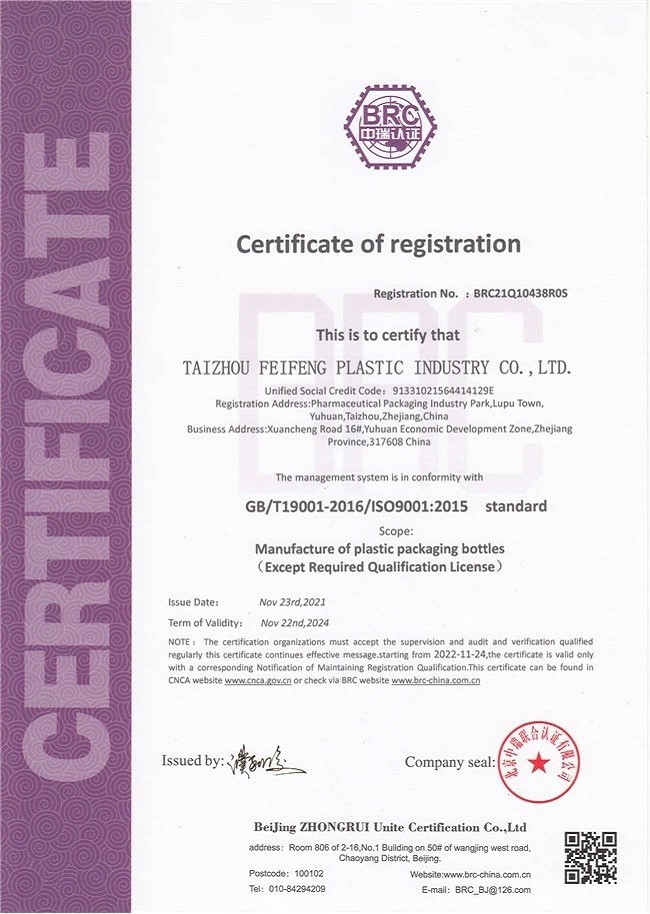
Our company has iso9001, food plastic packaging production license, other certificates are in the process of application, to give you a safe and assured product, welcome to consult and understand.
Materials Used in Disposable Beverage Bottle
01
Polyethylene Terephthalate (pet)
This plastic bottle material is perhaps the most well-known among consumers. Polyethylene terephthalate or pet is 100% recyclable and is used to make convenient plastic water bottles in various sizes, as well as water gallon jugs. This can easily be identified with the #1 recycling code around or at the bottom of the bottle.
02
High Density Polyethylene (hdpe)
High density polyethylene or hdpe is another popular material used for the manufacturing of plastic water bottles due to its durability, and it’s also completely recyclable. Easily recognizable by the #2 recycling code, it’s also used to store other products such as milk and juice, as well as household products like shampoo, dish soap and laundry detergent.
03
Polycarbonate (pc)
Polycarbonate plastic has been used to store food and beverages for more than 50 years because of its lightweightedness, shatter resistance, and transparency—all of which make them great for displaying their contents without breaking under repeated handling.

Disposable Beverage Bottle Are Easily Recyclable
Not only are they incredibly easy to manufacture, as well as convenient for consumers on the go, but they’re also easily recyclable after initial use. The plastic used in making water bottles can be recycled and reformed into a wide variety of secondary goods. Because of this, there are many drink bottles and other containers that have been made from recycling.
Disposable Beverage Bottle Are Malleable
When plastic material is put through the manufacturing process, they become incredibly malleable and easy to shape into different bottle shapes and forms. This becomes very helpful as manufacturers can quite literally mold plastic into whatever the customers need like bottles with handles, measurements and pouring lips.
Plastic material is not only easy to customize, but it can also be given different colors and translucency. Not only does this give customers much more options depending on their preferences, but it also makes it an easy way for brands and companies to customize their products and include their packaging in their branding strategies.
Disposable Beverage Bottle Require Less Energy
In terms of production and manufacturing, plastic bottles require much less energy to be produced compared to glass bottles. The chemical composition of plastic material makes it so that they’re not only softer but also have lower melting points, as opposed to glass that is much sturdier and requires more energy to heat and melt.
Plastic bottles are also much lighter, which means that companies can save money and energy when shipping them.
Disposable Beverage Bottle Are More Suited For Daily Life
When you think about everything you have to do in a day, plastic bottles really are the obvious choice when it comes to containing your water. Not only do they not shatter when dropped, but most if not all plastic bottles are also resistant to chemicals due to their nature as polymers—a series of small molecules that come together to form a larger molecule.
The Production Process of Disposable Beverage Bottle
Disposable beverage bottle is how to produce out of the plastic bottle production process commonly used in two:
The first is the extrusion process, the plastic raw materials will be added to the extruder, the heating and melt plastic extrusion extrusion molten billet, and then into the bottle mold inflation molding, cooling stereotypes removed from the mold, remove the waste side after the finished product. This process is mainly used to produce polyethylene, pvc plastic bottle, such as milk bottles, soy sauce bottles and so on.
The second is the injection of blowing process, that is, plastic raw materials injection molding machine through the injection molding machine, and then into the bottle mold by the stretch blow molding, cooling and finished products. This process is mainly used to produce pet plastic bottle, such as mineral water bottles.
Disposable beverage bottle is how to produce it, plastic bottle what process it? The plastic bottle is passed after the blow molding, the plastic is heated and melted, and then pressed into a special blow mold and the internal air pressure, the pressure, the mold plastic, the shape of the final product, because the shape of the bottle outward pressure, emphasis is that in the bottle itself inward, the heating temperature reaches a certain degree, will soften the plastic, the pressure resistance becomes smaller, so the bottle will become smaller and smaller.
Why Did Plastic Bottles Take Over And Replaced Glass Bottles
Plastic replacing glass as the primary beverage container wasn’t a historical fluke. Plastic offered a number of important advantages that gave companies that used it for packaging a huge competitive advantage, which forced industry-wide adoption in a few short years. Below are just some of the advantages plastic had over glass at that time.
Lower production costs
Plastic bottles are cheaper to produce. They require less energy and resources to manufacture and transport, making them more cost-effective in a number of important ways.
Lightweight and shatter-resistant
Plastic bottles are lightweight and shatter-resistant, which makes them a safer and more convenient option for transportation and storage. Although there are shatter-resistant glasses, they’re far more expensive than plastic and aren’t cost-effective for use as beverage containers.
Improved manufacturing technology
Plastic is more flexible and moldable than glass. This helps brands manufacture fit-for-purpose and unique containers that not only make the process more efficient but also help products stand out.
Environmental concerns
While this might have changed in recent years, plastic bottles were initially touted as a more environmentally friendly option, as they were lighter and required less energy to produce and transport.
What Does the Future Hold for Disposable Beverage Bottle
In recent years, to deal with regulations and concerns, industries have found new and innovative ways of using plastic, namely by recycling it. These processes enable more efficient use of plastic, reduce costs, and ensure plastic continues to be relevant in most major industries for decades to come. More than a million plastic bottles get recycled each day in the united states alone, and in this section, we’ll explore the new and exciting world of plastic recycling.
Plastic Recycling
Since the use of plastic is so integrated into our lives, completely replacing it is incredibly difficult, if not impossible. That’s why scientists have tried to find ways to make our use of plastic more environmentally friendly, and they’ve come up with a few innovations that, while still in their infancy, could decide the future of plastic.
●Chemical Recycling: There are projects in the works to design specialized recycling facilities able to break down plastic into its constituent parts, allowing it to be used to make new plastic products. Chemical recycling can process a wider variety of plastics than traditional mechanical recycling, which is limited to plastics of the same type. This means that chemical recycling could potentially handle a greater percentage of plastic waste. A reusable bottle will tax the environment much less than single-use plastic bottles.
●Environmentally Friendly Plastic: If the problem is that plastic doesn’t degrade naturally, why not change that? Scientists have asked the same question, and that’s how biodegradable plastic was invented. Biodegradable plastics break down more quickly than traditional plastics, reducing the amount of time they spend in landfills or the environment.
Precautions of Disposable Beverage Bottle
Never use overheated water or fire to burn the bottle. Usually when we use plastic bottle packaging containers, we may scald them with boiling water. As a result, we find that they are deformed, but we continue to use them. This is wrong. , because its material will volatilize when exposed to heat. Although pe is not poisonous, some plastic bottles use pet. At the same time, if it burns away from the fire and extinguishes when it encounters a fire, and emits a pungent smell, you can be sure that this material is toxic;
Avoid explosions to avoid aging. Usually, many plastic packaging bottles will become brittle, hard, and discolored when exposed to the sun for a long time. We all know that if this happens, it will release some harmful substances, accompanied by cosmetics or drinks enter our body and cause us great harm;
The quality of the product, we must pay attention to whether they meet the standards in the production workshop, and judge the quality of the product in the process of understanding, which will cause unnecessary trouble in the future;
The disposable beverage bottle of need to be more careful, and recycled plastic cannot be used for processing and production. This is clearly stipulated.
Certifications